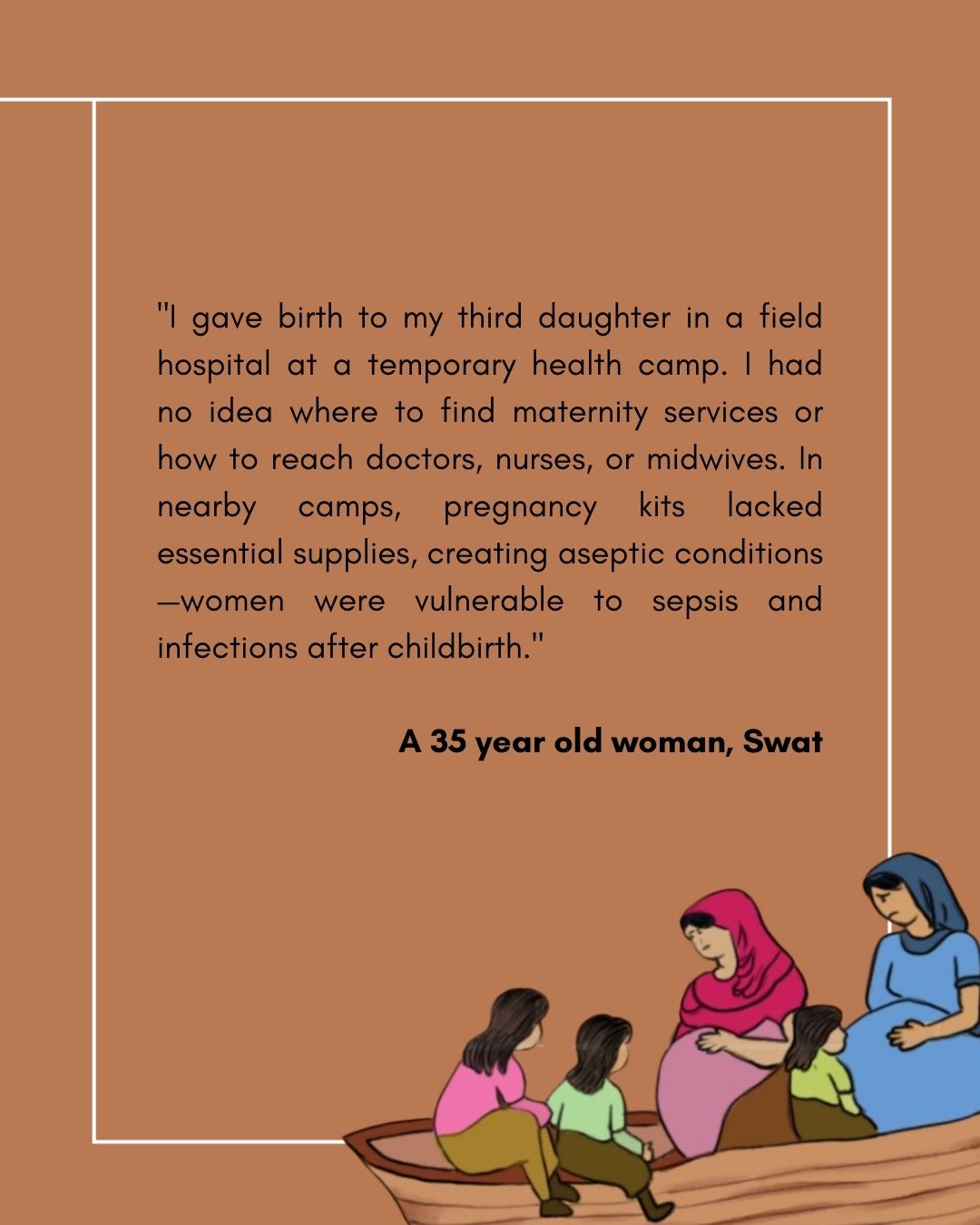
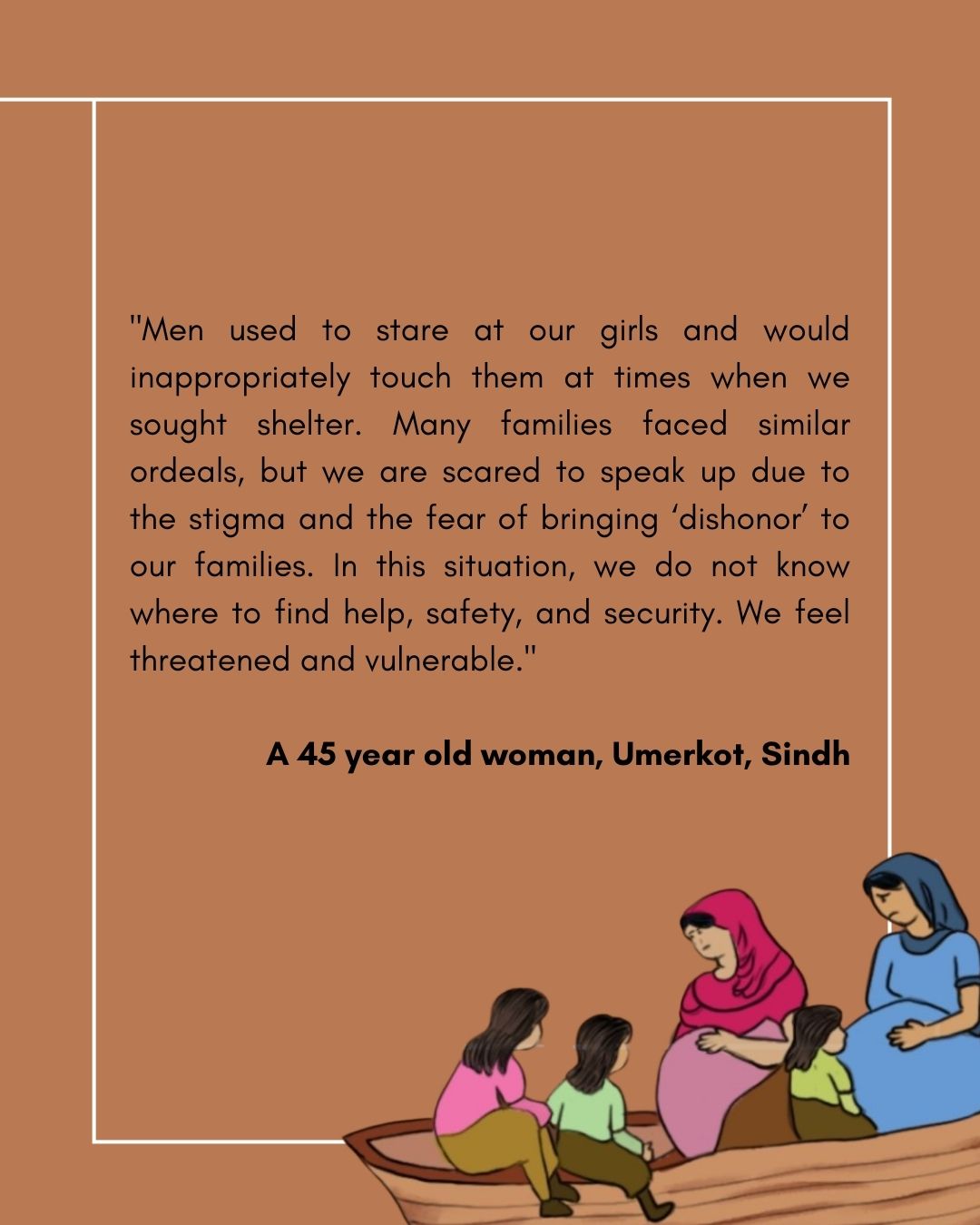
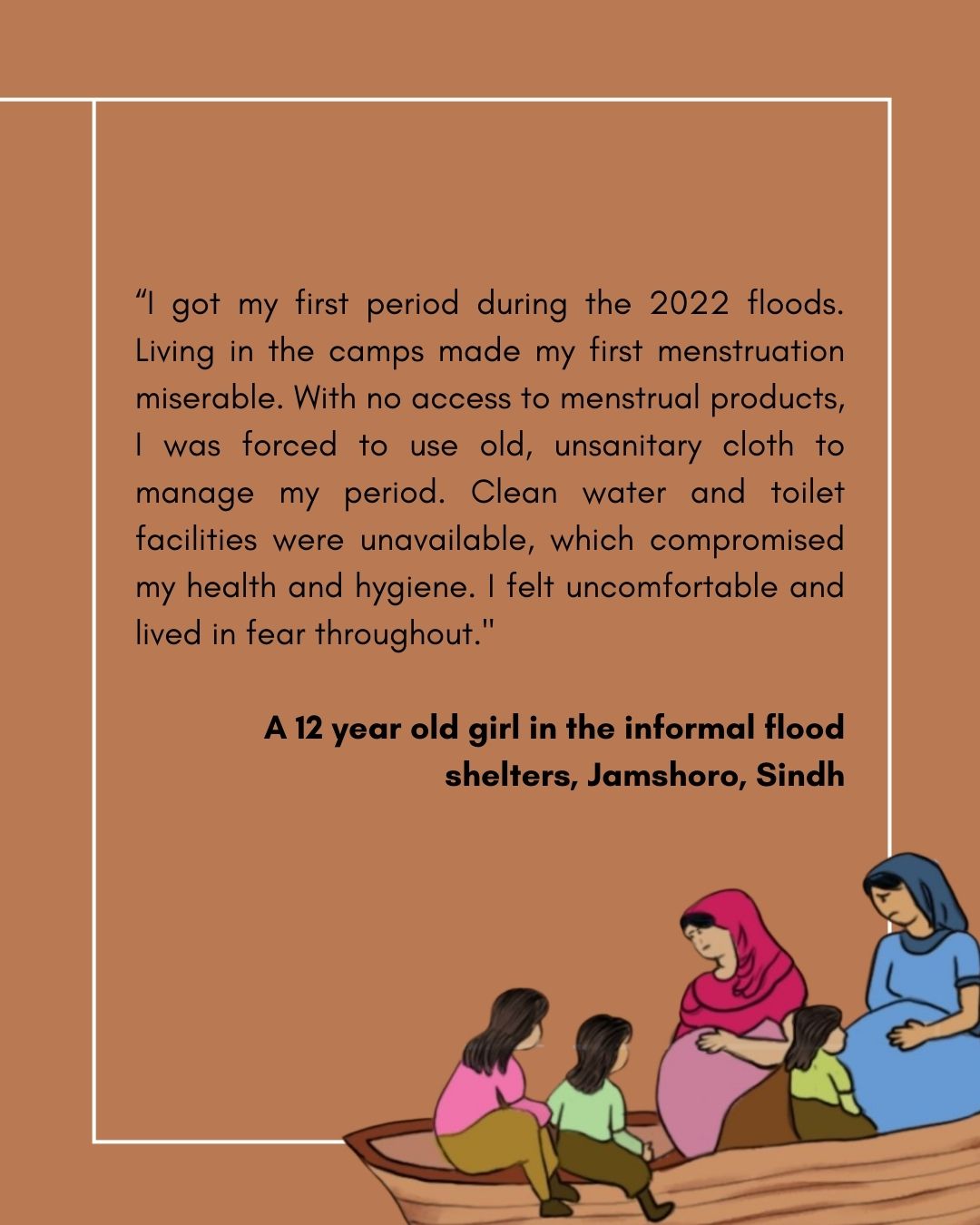
In 2022, Pakistan was hit by the worst climate crisis in the country’s history, affecting over 33 million people including around 8.2 million girls and women of reproductive age and 650,000 pregnant girls and women. Distressing conditions faced by displaced young girls in relief camps highlighted their vulnerability, particularly the heightened risk of gender-based abuse, sexual violence, unintended pregnancies, child marriages, negative maternal and neonatal outcomes, and human trafficking. Due to displacement, loss of mobility, and existing stigma, young girls’ access to menstrual products, sexual and reproductive health services, and family planning services was also severely compromised.
During the 2022 floods, Baithak actively engaged with disaster-impacted communities as part of our humanitarian response. Our on-ground research revealed that women experienced magnified inequalities in climate-affected regions, with a complete neglect of young girls’ sexual and reproductive health rights. Girls with disabilities faced additional challenges, as their needs during evacuation and in flood camps were overlooked entirely.
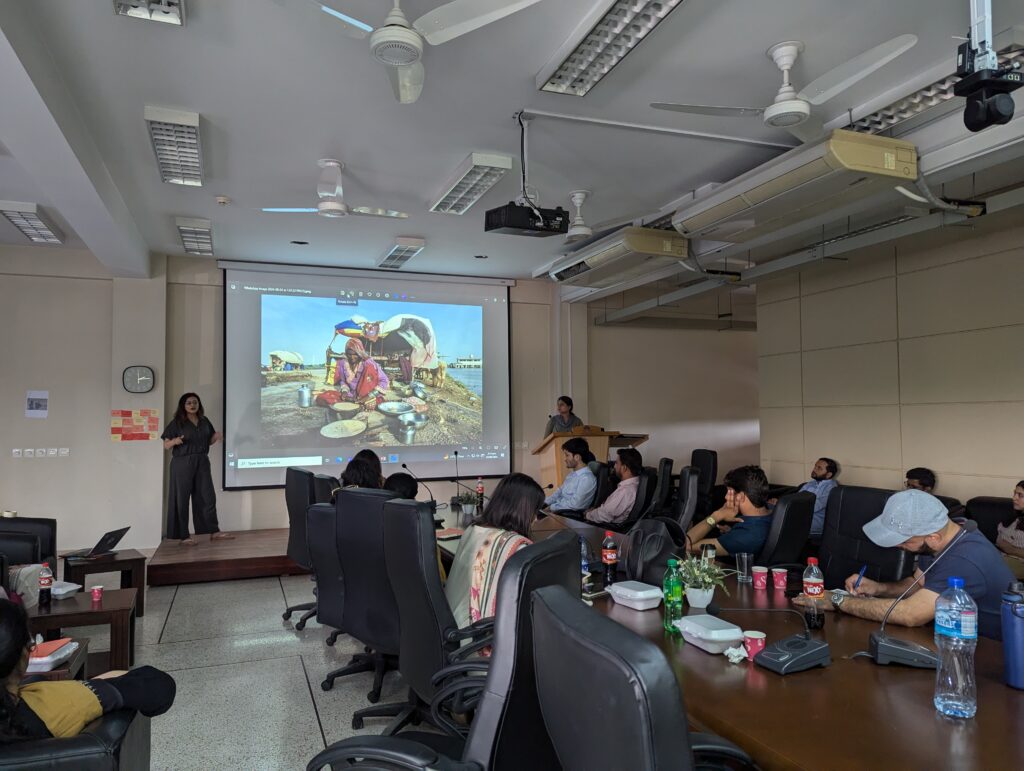
Pakistan ranks among the top 10 countries most vulnerable to climate change, despite contributing less than 1% to global greenhouse gas emissions. Recurring floods, extreme heatwaves, droughts, and glacial melt continue to displace communities and deepen existing inequalities disproportionately impacting women and girls.
Grassroots organizations and activists are often the first to respond during climate-induced disasters, given their proximity to affected communities and deep-rooted understanding of local needs. By strengthening their capacity to respond to gender specific needs, we can ensure more inclusive, timely, and community-led responses that center the needs of girls, women, and transgender persons.
At the same time, there exists a significant disconnect between grassroots organizations (especially young people and women) and government institutions, including policymaking spaces. This disconnect limits opportunities for collective advocacy and gender-responsive planning. GRACE seeks to bridge this gap by enabling collaboration between grassroots civil society and government stakeholders so lived realities and voices of those affected by climate change and crises shape policies ensuring that gender equity is central to climate action at all levels.